
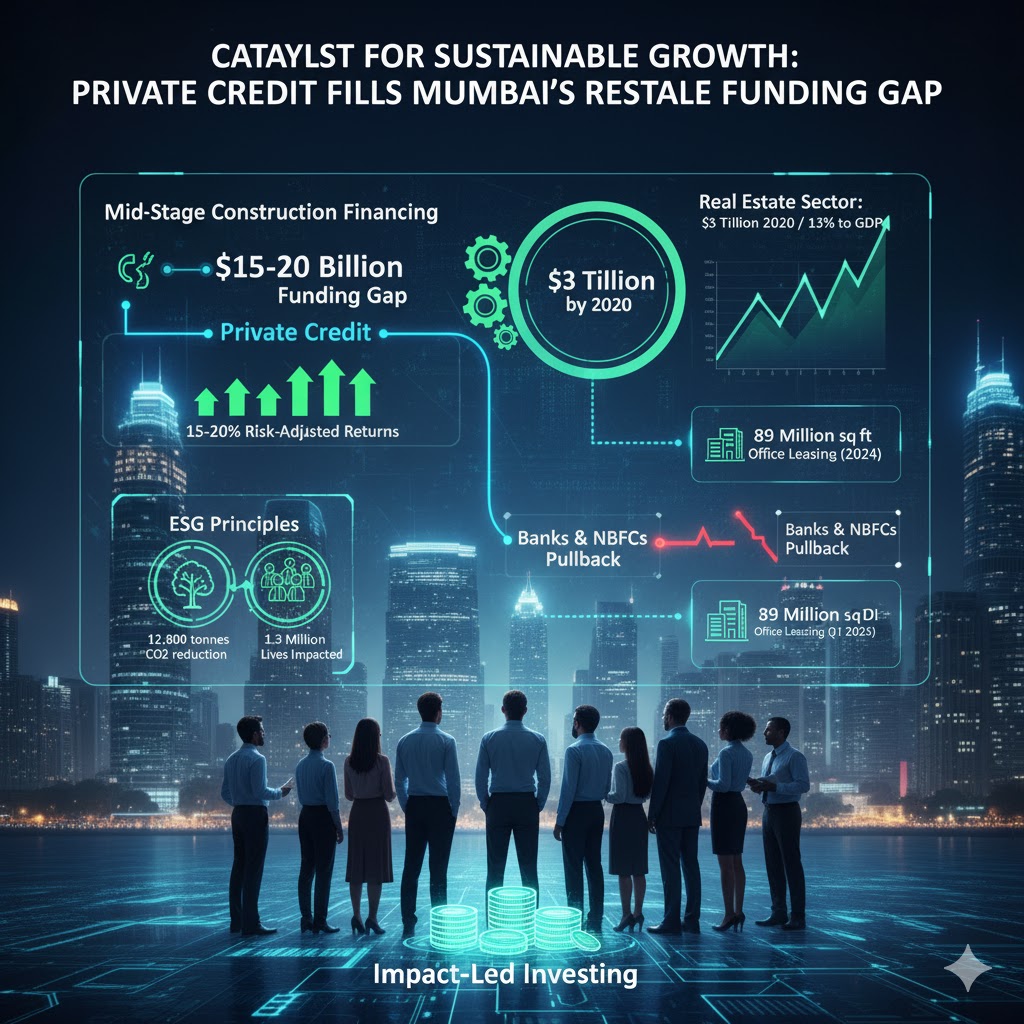
Mumbai, one of India's bustling metropolises, is witnessing a significant transformation in its real estate landscape. Mid-stage construction financing, a critical aspect of property development, is currently facing a substantial funding gap estimated at $15-20 billion. This presents a unique opportunity for the private credit segment to step in, offering attractive risk-adjusted returns of 15-20 percent. According to a recent report by Sundaram Alternates, the potential of private credit in this sector is immense, particularly as traditional banks and non-banking financial companies (NBFCs) have become more risk-averse.
The report emphasizes that the real estate sector is projected to reach an astonishing $1 trillion by 2030, contributing about 13 percent to India’s GDP. However, the current scenario shows that mid-stage construction financing remains largely underserved, creating a fertile ground for private credit to flourish. This funding source not only promises financial returns but also aligns with impact-led investing, which is becoming increasingly important in today's market.
Moreover, integrating environmental, social, and governance (ESG) principles into private credit solutions can yield significant benefits. The report reveals that ESG-focused private credit can potentially reduce carbon emissions by 12,800 tonnes annually and positively impact the lives of over 1.3 million individuals. As the demand for sustainable practices in real estate grows, private credit can play a pivotal role in incentivizing developers to adopt greener initiatives, thereby bridging the funding gap in an innovative manner.
As the property market evolves, it is essential for investors to recognize the potential of private credit. Recent trends indicate that India's property market is on an upward trajectory, with 89 million sq ft of office leasing recorded in 2024 and a remarkable 35 percent increase in foreign direct investment inflows during the first quarter of 2025. However, the ongoing pullback by banks and NBFCs from mid-stage financing highlights the urgent need for alternative funding solutions, where private credit can seamlessly fill the void.
In conclusion, as Mumbai and other cities like Delhi and Bangalore continue to grow, the role of private credit in real estate financing cannot be overstated. By providing necessary funds while adhering to ESG principles, private credit emerges not just as a financial tool but as a catalyst for sustainable growth, paving the way for a resilient real estate sector that contributes to India's economic ambitions.