
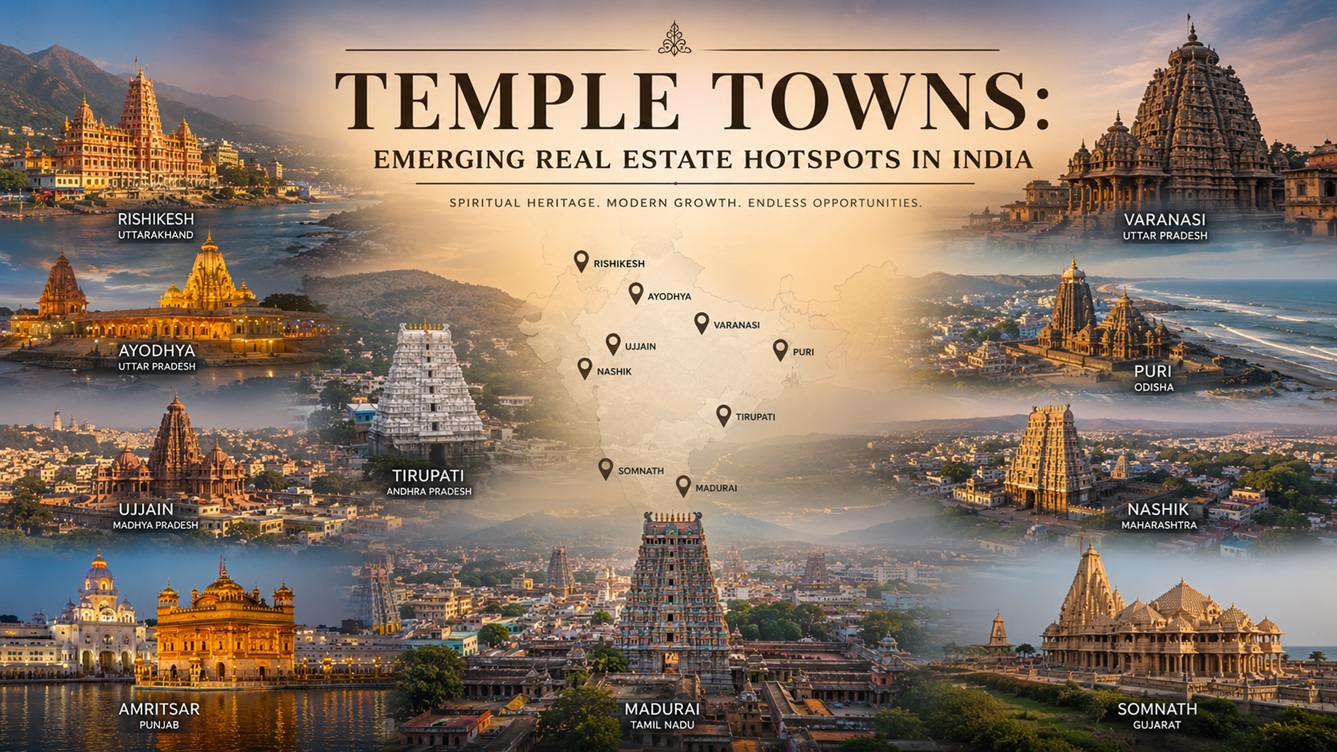
The real estate market in India's temple towns is witnessing unprecedented growth, driven by a notable rise in religious tourism and substantial government investment in infrastructure. Key cities such as Ayodhya, Varanasi, and Vrindavan, alongside various locations in Southern India, are becoming attractive destinations for real estate developers. Recent policy initiatives, particularly highlighted in the 2026 Union Budget, aim to enhance connectivity and civic amenities in tier-two cities, thereby facilitating an improved experience for visitors. This increased focus on infrastructure has made these temple towns prime candidates for real estate investment, as developers seek to capitalize on the burgeoning potential of the market, which is significantly influenced by the government's commitment to promoting religious tourism.
The growing influx of visitors to these towns has led to an increasing demand for structured housing, hospitality services, and mixed-use developments. Travel patterns are evolving; trips that were once short and primarily focused on spiritual experiences are now extending, especially among families and retirees looking for longer stays. This shift necessitates organized housing options and supporting infrastructure close to religious sites, creating a unique opportunity for developers to meet these emerging needs. The temple economy in India is valued at approximately ₹6 lakh crore, underscoring its significance as one of the largest economic ecosystems in the country and providing further impetus for real estate ventures in these regions.
Real estate developers are responding to this evolving landscape by creating projects that not only meet modern living standards but also integrate the spiritual essence of these locales. Temple towns are transforming from mere transit hubs into desirable living destinations, attracting individuals seeking a more meaningful and tranquil lifestyle. Projects like the 110-acre Temple Town development near the Lakshmi Narasimha Temple in Yadagirigutta exemplify this trend. Kirthi Chilukuri, Founder and Managing Director of Stonecraft Group, emphasizes that such developments aim to honor India's spiritual heritage while fostering communities that blend tradition with contemporary living. This approach is indicative of a broader trend where the demand for purpose-led living is reshaping the real estate landscape in these areas.
Additionally, the focus on wellness and second-home living is gaining traction, as these developments are marketed as wellness-oriented communities that harmoniously integrate nature, mindfulness, and modern conveniences. Investors from urban areas are increasingly interested in properties that offer not only a retreat from the hustle and bustle of city life but also a chance to engage with the spiritual and cultural richness of these towns. As temple towns continue to evolve into real estate hotspots, the blend of spirituality, wellness, and community living is poised to redefine the future of housing in these historically significant areas.