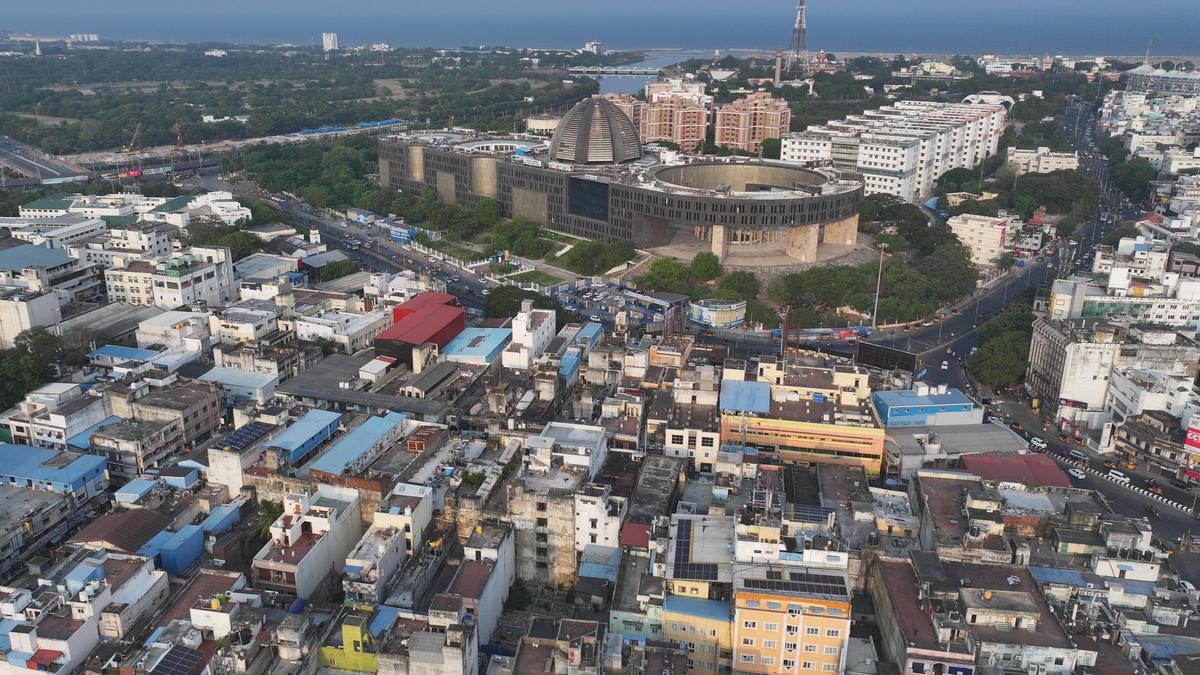
With the election of actor C. Joseph Vijay and his Tamilaga Vettri Kazhagam (TVK) government in Tamil Nadu, the real estate industry is looking forward to a range of reforms aimed at addressing pressing concerns and fostering growth. Stakeholders are advocating for expedited approval processes, clearer land use policies, and significant infrastructure enhancements. Key areas of focus include investments in flood-resilient infrastructure, efficient water management systems, improved road networks, and enhanced public transport options. Additionally, there is a strong push to accelerate the development of the proposed Parandur greenfield airport project to meet the demands of rapidly growing urban areas.
Ranjeeth Rathod, managing director of DRA, a Chennai-based real estate firm, emphasizes the sector's role as a substantial employment generator and economic catalyst in Tamil Nadu. He notes that the real estate industry supports over 250 allied sectors, including cement, steel, logistics, and financial services. Rathod points out that the new government has a crucial opportunity to position Tamil Nadu, particularly Chennai, as a leader among India's urban economies. He stresses the importance of adopting a holistic approach that incorporates sustainable development practices into urban planning.
Sanjay Chugh, city head and director of ANAROCK Property Consultants, highlights the need for faster approvals for Grade-A developments and the establishment of dedicated GCC clusters. He asserts that improved public transport connectivity and mixed-use developments are vital as Chennai evolves into a key Gulf Cooperation Council (GCC) destination. Chugh advocates for a reevaluation of the Floor Space Index (FSI) in infrastructure-ready corridors, especially those near Metro Rail networks, to facilitate vertical growth in the city. He also calls for comprehensive climate resilience strategies that encompass flood management, integrating macro drains, lakes, and urban planning controls.
Bala Ramajayam, founder and managing director of G Square Group, underscores the need for digitization of land records and the implementation of transparent policies to strengthen buyer confidence. W.S. Habib, president of the Confederation of Real Estate Developers Associations of India (CREDAI), echoes these sentiments, arguing that dynamic, forward-thinking Master Plans are essential for Tamil Nadu's major cities and emerging urban areas. He emphasizes the need for a focus on transit-oriented development, planned expansion corridors, and affordable housing solutions. The collective voice of the real estate sector is clear: the new government must prioritize these initiatives to ensure sustainable growth and development in Tamil Nadu's real estate landscape.