
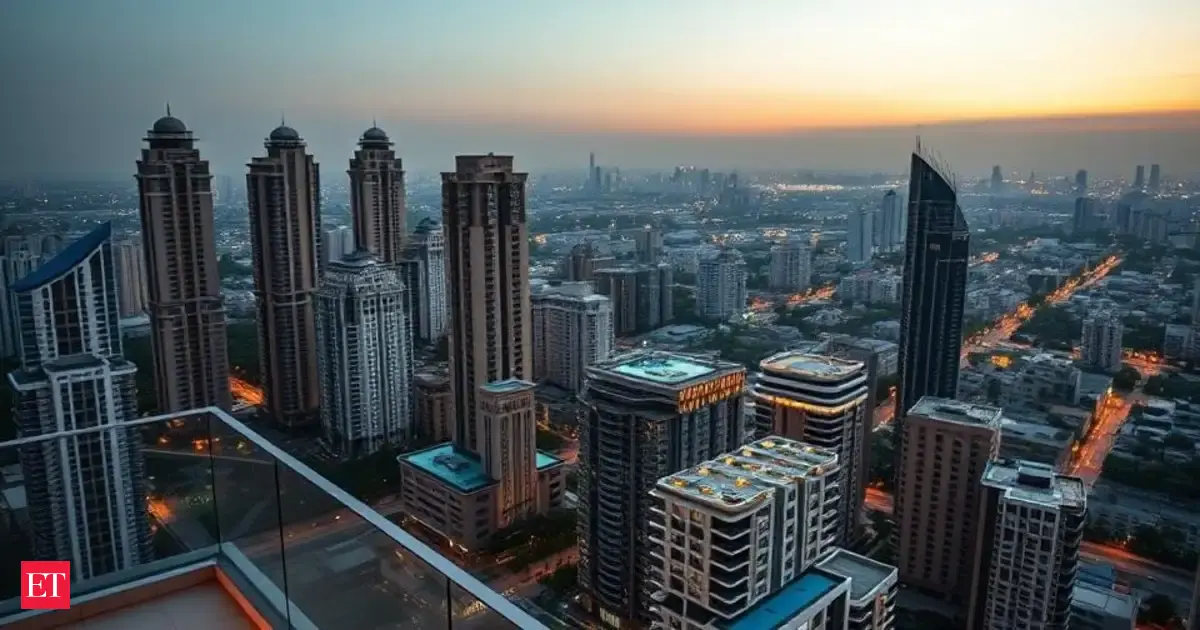
Mumbai, the financial capital of India, is witnessing a remarkable transformation in its luxury housing sector. Luxury properties are now constituting 27% of the overall housing market, a significant leap fueled by an increasing desire for high-end aesthetics and premium amenities. As the demand for upscale living spaces surges, non-metro regions are emerging as attractive alternatives, effectively narrowing the price gap with established urban centers.
Recent studies reveal that the luxury housing market is on the brink of explosive growth, projected to reach $103 billion by 2030, marking a CAGR of 35% from its current valuation of $17 billion in 2024. This uptrend is not just limited to luxury homes but extends to other luxury categories such as jewelry, watches, and automobiles, fundamentally reshaping the real estate landscape. The Magicbricks report indicates that demand for luxury homes has escalated from 14% to nearly 18%, signaling a shift in homebuyer priorities towards superior design, convenience, and technology-driven living solutions.
The Magicbricks Luxury Price Index (LPI) serves as a clear indicator of this burgeoning trend. In Tier-1 cities, the LPI has stabilized at 2.27 in 2025, down from 2.32 in 2021, suggesting that mainstream housing prices have risen steadily while the premium gap is narrowing. Conversely, emerging luxury markets have experienced a significant spike in their LPI, rising from 1.00 to 1.44, backed by a staggering 27% increase in demand and an 86% surge in supply. This data underscores the growing appeal of luxury living in developing areas, indicating that buyers are increasingly willing to invest in these locations.
The median price points of luxury homes across various cities further illustrate this trend: Mumbai leads with ₹9.66 crore, followed by Gurugram at ₹5.46 crore, Bengaluru at ₹2.91 crore, Hyderabad at ₹2.20 crore, Chennai at ₹2.00 crore, Pune at ₹1.97 crore, and Kolkata at ₹1.50 crore. These figures highlight a burgeoning depth of premium housing options that are becoming available to discerning buyers across India.
In conclusion, the luxury housing segment is not only thriving in traditional metropolises but is also expanding into emerging hotspots. This shift is redefining residential choices for buyers, who are increasingly seeking luxury accommodations that offer value, design, and accessibility. As the market continues to evolve, it reflects a broader trend of luxury living becoming more accessible and desirable across the country.