
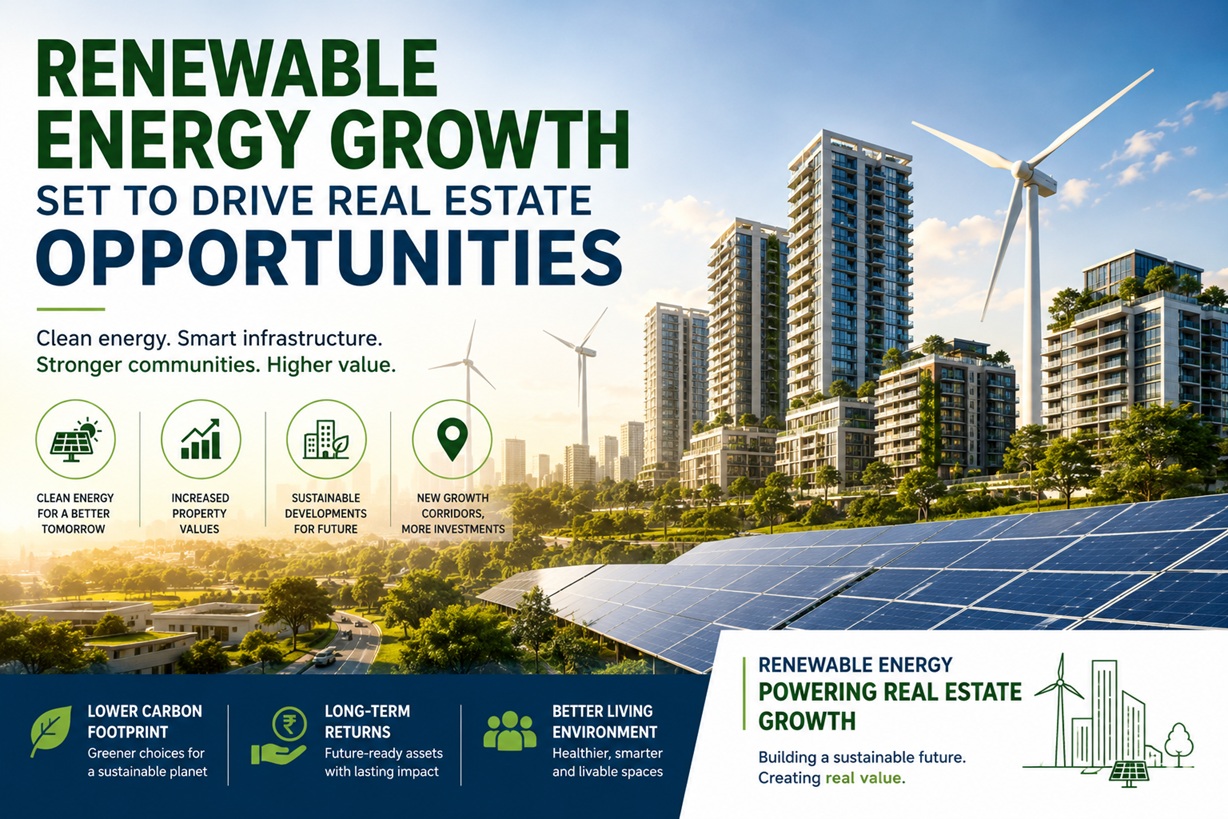
India's renewable energy sector is poised for significant expansion, with the installed capacity projected to reach 500 gigawatts (GW) by 2030, doubling the current figure of 251 GW as of 2025. This ambitious target is largely driven by solar and wind energy, which currently account for approximately 75% of the country's total renewable capacity. According to a report by Colliers India, this green energy push is expected to catalyze a major influx of land investments in the real estate market, estimated between $10 billion and $15 billion by 2030. The need for land aggregation to support new solar and wind projects highlights how the intersection of energy and real estate can create lucrative opportunities for stakeholders in both sectors.
The anticipated growth in renewable energy infrastructure will require substantial land resources, with projections suggesting that around 700,000 acres will be necessary for upcoming projects. This demand will not only affect land prices but also create avenues for developers and land aggregators to engage in significant real estate transactions. Given that land acquisition typically represents 10-12% of the total costs associated with renewable energy projects, the implications are profound. As India commits to investing approximately $110 billion in renewable energy within the next few years, the real estate sector stands to benefit substantially from these land-related activities.
In particular, the industrial and warehousing segments are likely to see considerable growth. The report notes that renewable energy original equipment manufacturers (OEMs) have already increased their leasing activity, occupying about 6.1 million square feet of grade A industrial and warehousing space across India's top eight cities between 2021 and 2025. The share of renewable energy OEMs in overall leasing demand has grown from 3% in 2021 to an estimated 8% by 2025. This trend underscores a burgeoning demand for dedicated spaces that support the manufacturing and distribution of solar panels, wind turbines, and other essential components of renewable energy.
By 2030, the annual demand for warehousing from renewable energy OEMs could escalate to between 4 million and 7 million square feet, potentially representing 10-15% of total industrial and warehousing demand in India. Cities like Chennai and Pune are emerging as focal points for renewable manufacturing and logistics, reflecting a broader trend towards regional specialization in the renewable sector. Vimal Nadar, national director and head of research at Colliers India, emphasizes that the rapid growth in leasing by renewable energy OEMs—quadrupling to approximately 3 million square feet in 2025—will be fueled by the domestic manufacturing of essential components such as solar modules, wind turbines, and battery storage systems. This comprehensive growth in both renewable energy production and real estate development indicates a promising future for India's real estate market, driven by sustainable energy initiatives.