
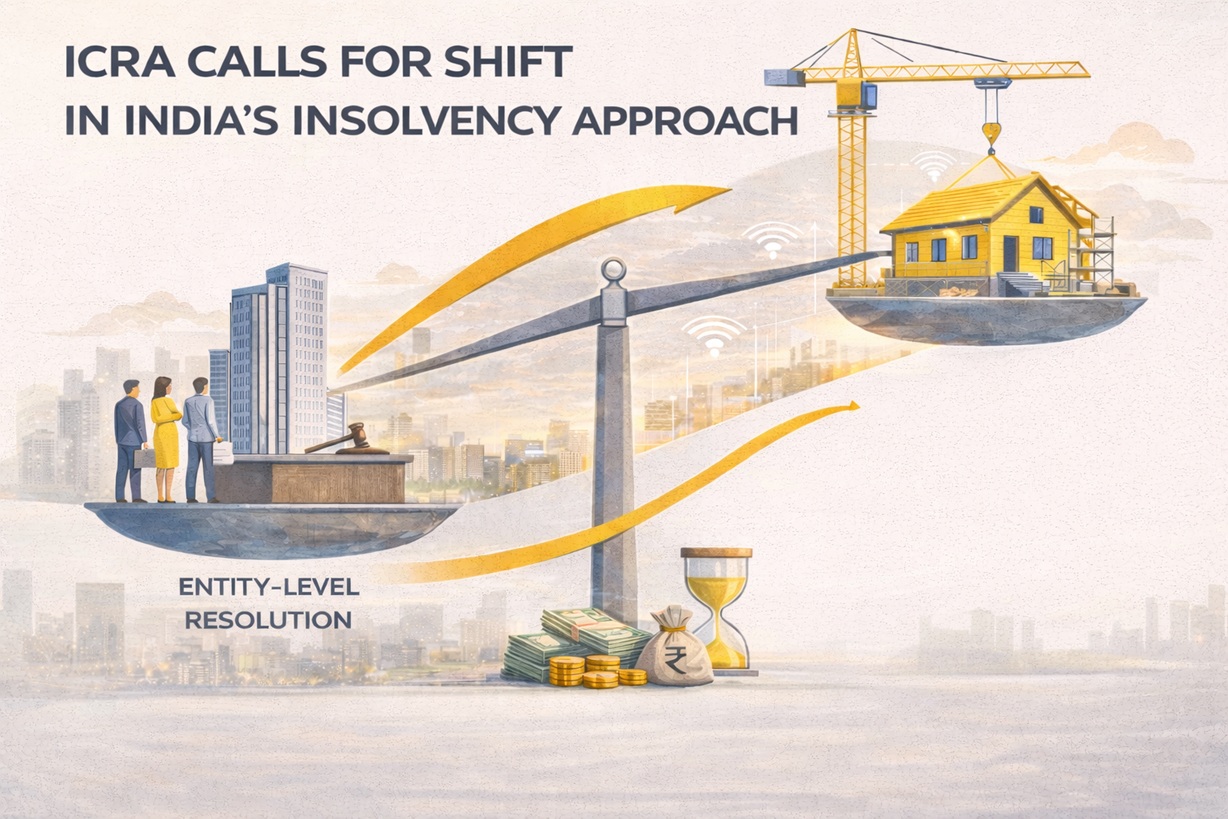
In a significant development for India's real estate sector, a recent report by ICRA emphasizes the urgent need for a paradigm shift in the country's insolvency framework. The report advocates for moving away from the traditional entity-level resolution approach towards a project-centric model that prioritizes the completion and delivery of homes. This shift is deemed essential not only for enhancing stakeholder confidence but also for addressing the unique challenges posed by real estate insolvency cases, which often have considerable social implications for homebuyers.
The recommendations outlined in the report stem from findings by the Committee on Framing Guidelines for Insolvency Proceedings in the Real Estate Sector, which submitted its findings to the Insolvency and Bankruptcy Board of India earlier this week. Manushree Saggar, Senior Vice President and Group Head of Structured Finance at ICRA Ltd, underscored the necessity of strengthening coordination between the Insolvency and Bankruptcy Code, 2016 and the Real Estate (Regulation and Development) Act, 2016. The report identifies 55 critical issues impacting real estate insolvency and proposes 155 actionable recommendations aimed at creating a more efficient and effective framework.
The report suggests that transitioning to a project-centric approach will not only facilitate timely project completion but also significantly mitigate the adverse social consequences of real estate insolvency. With real estate having the second-highest proportion of cases under the Insolvency and Bankruptcy Code, it is vital to recognize that financial recovery is not the only objective. As Saggar noted, the direct impact of these insolvencies on homebuyers underscores the need for resolutions that prioritize the delivery of homes over mere financial outcomes. The findings highlight that ongoing and resolved insolvency cases currently affect nearly a quarter of a million homebuyers, creating housing insecurity for potentially one million individuals when accounting for household sizes.
To achieve the recommended changes, the report calls for enhanced procedural, structural, and institutional reforms that align insolvency processes with real estate regulations. This comprehensive approach aims to ensure that the insolvency code operates as a proactive tool for resolution, rather than a source of prolonged uncertainty. By harmonizing the insolvency framework with real estate sector-specific regulations, the report posits that efficiency will improve, ultimately leading to increased stakeholder confidence. The proposed project-centric shift not only addresses the pressing needs of homebuyers but also represents a critical step towards a more resilient and responsive real estate sector in India.