
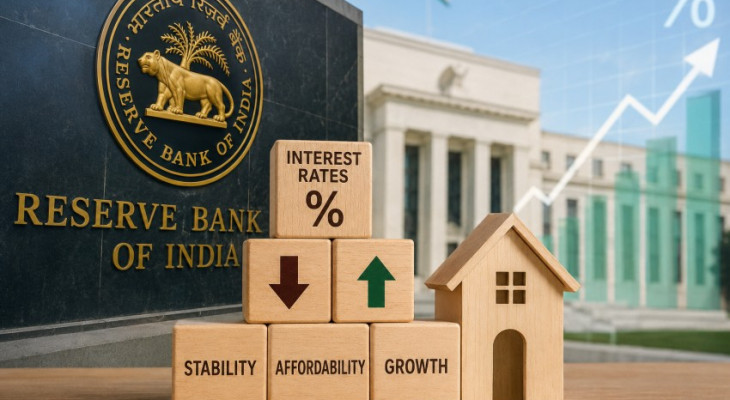
As the Reserve Bank of India's Monetary Policy Committee (MPC) convenes for its second bi-monthly policy review of FY27, industry stakeholders are advocating for the maintenance of current interest rates. Executives from the real estate sector emphasize that stability in borrowing costs is vital for sustaining housing demand, affordability, and investment activities. The six-member MPC, led by RBI Governor Sanjay Malhotra, is expected to announce its decision on June 5, with market analysts largely predicting that the repo rate will remain unchanged at 5.25 percent. This expectation is shaped by ongoing global economic uncertainties, high crude oil prices, and geopolitical tensions, all of which contribute to inflationary pressures. Industry leaders argue that external factors, rather than domestic demand, are predominantly driving inflation, making a rate hike counterproductive to economic growth. Shishir Baijal, Chairman and Managing Director of Knight Frank India, asserts that increasing rates could undercut housing demand and residential sales without effectively curbing inflation. He emphasizes that rate stability is crucial for fostering a conducive environment for investment in the real estate sector.
In addition to the real estate sector, the infrastructure industry shares similar sentiments regarding interest rates. Rajan Luthra, CFO of Action Construction Equipment, argues that a stable or accommodative policy stance is essential for enhancing business confidence and facilitating capital deployment throughout the infrastructure value chain. The correlation between financing conditions and project execution underscores the need for consistency in monetary policy, as fluctuations in rates can significantly impact investment decisions and project timelines. The interconnectedness of these sectors highlights the broader implications of the MPC's decisions on overall economic stability.
Affordability remains a pressing concern for homebuyers and developers alike. With borrowing costs directly affecting purchasing decisions across various housing segments, maintaining the current repo rate would bolster consumer confidence and provide developers with the predictability necessary for long-term planning. Preeti Rai, President of Sales and Strategy at Origen Realty, notes that stable borrowing costs allow consumers to make informed choices, supporting continued momentum in the housing market. The importance of affordability extends to Tier-II cities and emerging micro-markets, where interest rates play a critical role in shaping buyer behavior. Yash Miglani, Managing Director of Migsun Group, reiterates that a consistent policy would help sustain confidence among consumers and businesses, particularly in the face of global uncertainties and rising crude oil prices.
While the prevailing sentiment leans towards a status quo on interest rates, some developers advocate for a reduction to further stimulate housing demand. The diverse perspectives within the industry reflect a nuanced understanding of the intricate relationship between interest rates, economic conditions, and market dynamics. As the MPC approaches its decision, the collective voice of the real estate and infrastructure sectors underscores the importance of stable monetary policy in fostering a resilient economic environment.