
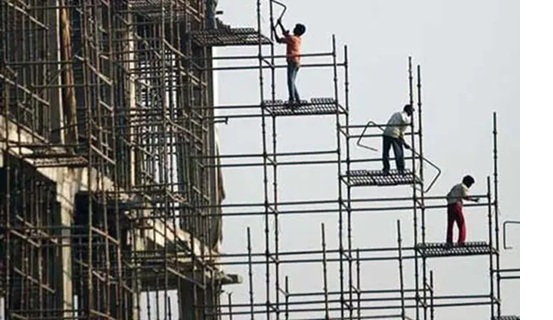
India's real estate sector is currently grappling with a significant labor shortage and escalating costs that are affecting project timelines and overall market stability. The recent spike in liquefied petroleum gas (LPG) prices, compounded by supply constraints linked to geopolitical conflicts in West Asia, has significantly raised the cost of living for many migrant workers. As a result, an increasing number of these workers are opting to return to their home states, leading to a noticeable dip in labor availability across major property markets such as Mumbai, Delhi-NCR, and Pune. Developers have reported that labor costs have surged by 5-15% due to this mismatch between demand and supply, with predictions that the long-term effects could be even more detrimental to the industry.
Vishal Agarwal, joint managing director of Krisala Developers in Pune, emphasized the immediate nature of this labor disruption, particularly during the months of March and early April. Many migrant workers, especially those in low-wage jobs, are struggling to sustain themselves in urban centers due to the rising costs of essential goods like cooking fuel and food. While larger, organized projects with robust in-house facilities have managed to maintain workforce stability, the broader real estate ecosystem is undoubtedly under strain. Agarwal noted that the current situation bears a resemblance to the reverse migration seen during the pandemic, indicating a troubling trend for the industry.
Rohit Gupta, CEO of Mantra Group, acknowledged the challenges posed by the labor shortage but highlighted that his company has been able to mitigate some of the impacts through proactive worker welfare initiatives. By ensuring access to basic amenities and fostering strong relationships with contractors, Mantra Group has managed to retain a considerable portion of its workforce. However, Gupta remains cautious about the evolving situation as the demand for skilled labor continues to rise. The real estate sector is experiencing a construction boom, driven by flourishing housing, commercial, and hospitality markets, amplifying the demand for skilled workers.
Niranjan Hiranandani, chairman of the National Real Estate Development Council (Naredco), pointed out that the imbalance between labor demand and availability is particularly stark in high-growth markets. He noted that the costs for skilled labor have seen an increase of approximately 8-10%, a trend driven by the heightened cost of living and ongoing construction disruptions. The current labor market dynamics pose significant challenges for the real estate sector as it strives to meet the burgeoning demand for housing and commercial spaces. Without a concerted effort to address these labor shortages and rising costs, the industry may face increasing difficulties in sustaining its growth momentum in the coming months.