
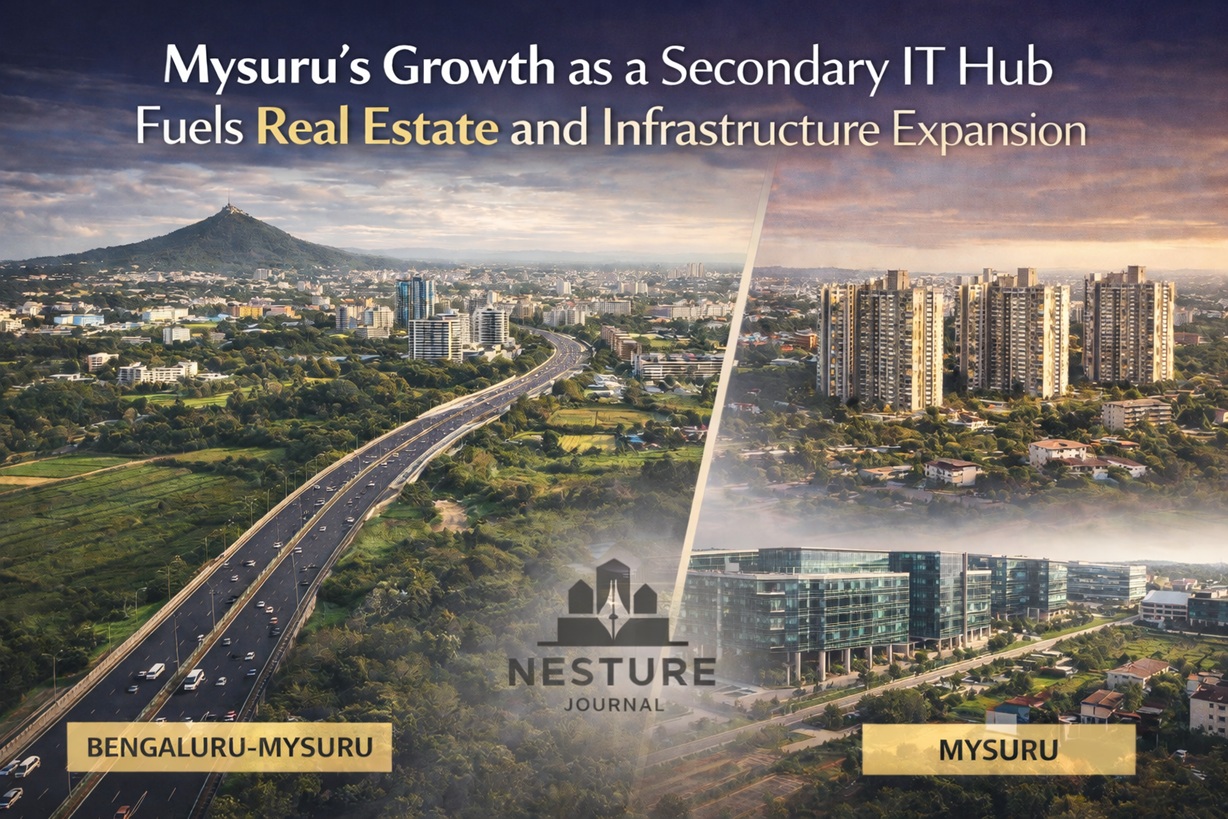
Karnataka's initiative to establish Mysuru as a secondary IT hub is beginning to influence the local real estate market, marking a shift from mere speculation to a more structured growth trajectory. Major companies such as IBM, Infosys, and HGS are setting up satellite centers in Mysuru rather than relocating their headquarters. This strategic move positions Mysuru as a complementary technology node to Bengaluru, rather than a direct competitor. The hub-and-spoke model is reshaping expansion strategies for many firms, as they aim to maintain a primary presence in Bengaluru while exploring the advantages of satellite operations in nearby cities.
The Karnataka Global Capability Centers (GCC) policy is designed to attract global firms across various sectors, including technology, financial services, and engineering. This approach is expected to bolster long-term demand for office space in smaller cities like Mysuru. However, the current office market dynamics present a stark contrast; Bengaluru reported a net absorption of approximately 14.15 million square feet in 2025, leading the country’s primary urban centers. In comparison, Mysuru's annual net office absorption stands at a modest 20,000 to 40,000 square feet, highlighting the disparity in market activity. Analysts at ANAROCK project that Grade-A office leasing in Mysuru could reach between 2 to 3 million square feet over the next five to seven years. While this signifies growth, it remains a fraction of Bengaluru's annual absorption figures.
The composition of early demand in Mysuru is also noteworthy. Anshuman Magazine, Chairman & CEO of CBRE India, emphasizes that initial entrants into Mysuru will likely be IT service firms and back-office operations that are already established in Bengaluru, seeking more cost-effective expansion opportunities. Typically, flex space operators tend to follow these initial developments, paving the way for institutional Grade-A office supply in emerging markets. Nevertheless, infrastructure remains the key factor determining the pace and scale of growth in Mysuru. While the Bengaluru-Mysuru Expressway enhances connectivity, Magazine notes that reliable power supply, last-mile connectivity, and the availability of local talent are crucial for the market's long-term viability.
On the residential front, Mysuru presents a promising opportunity in the near term. Property prices in the city are significantly more affordable compared to Bengaluru, leading to a steady rise in demand for mid-income housing. The expressway has facilitated the emergence of a hybrid work corridor, allowing professionals to commute from Mysuru while enjoying the benefits of lower living costs. Recent land acquisitions by Brigade Group in Mysuru, totaling approximately 16.5 acres, indicate that developers based in Bengaluru are proactively positioning themselves for future growth. As Vimal Nadar suggests, the trajectory of real estate development in Mysuru is set to accelerate, driven by increased economic and infrastructural investments in Tier II cities, which could enhance housing demand and support the growth of the technology sector, ultimately catalyzing commercial real estate development in the region.