


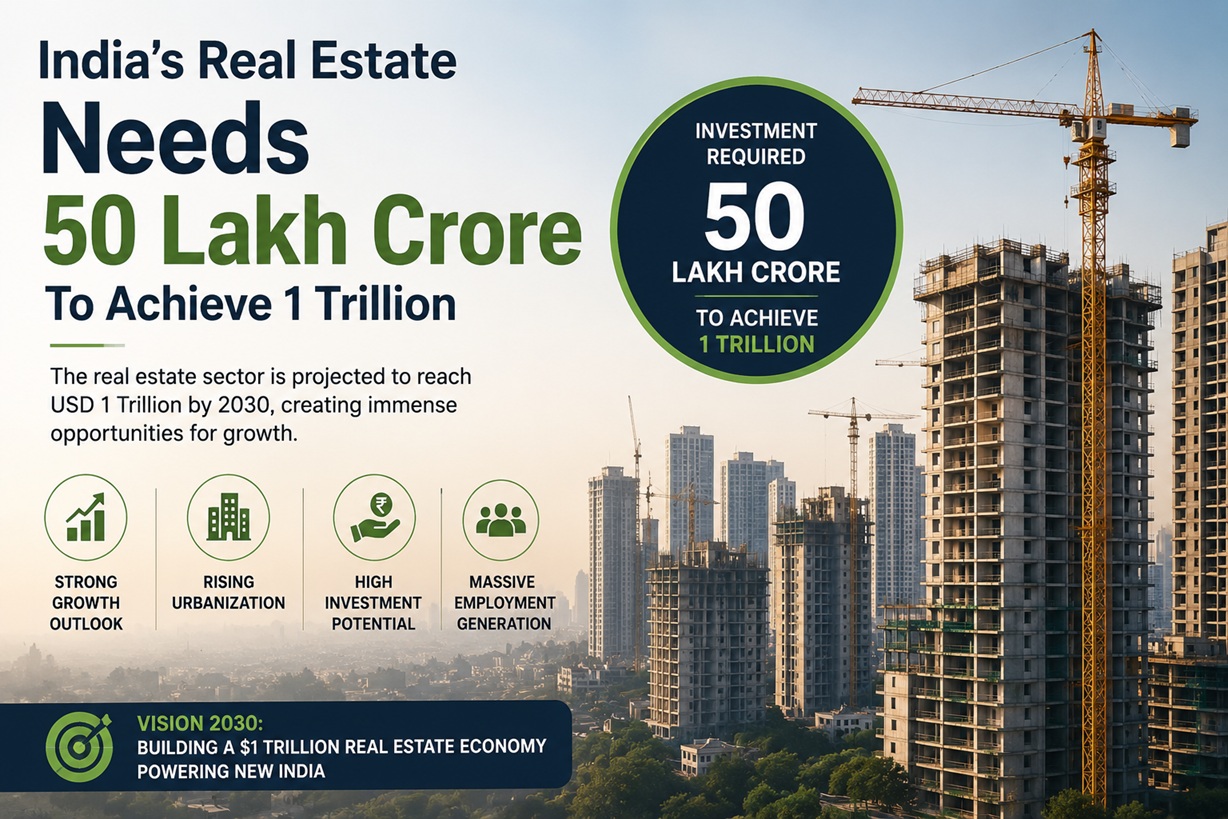
The Indian real estate sector is on the brink of a significant transformation, requiring an estimated ₹50 lakh crore in capital over the next decade to evolve into a $1 trillion industry by 2030. Currently, the real estate capital market stands at ₹50 lakh crore, with approximately ₹38 lakh crore allocated to housing loans and ₹12 lakh crore directed towards commercial real estate loans for developers, as reported by Anarock Capital. This substantial financial requirement highlights the potential growth trajectory of the sector and underscores the necessity for adequate investment to realize this ambitious target.
In recent years, the real estate capital market in India has undergone a notable evolution, shifting from a fragmented ecosystem dominated by non-banking financial companies (NBFCs) to a more institutional and transparent landscape. This transformation is largely attributed to the increasing involvement of banks, Alternative Investment Funds (AIFs), Real Estate Investment Trusts (REITs), and private credit sources, alongside government-backed initiatives. These changes have fostered a regulated and diversified capital market, which is crucial for sustainable growth. Furthermore, the Reserve Bank of India's (RBI) ongoing enhancements to the project finance framework, coupled with the deepening of capital markets, have fortified the lending ecosystem.
Despite these positive developments, challenges remain, particularly in ensuring that capital distribution is equitable across various segments of the real estate market. Shobhit Agarwal, CEO of Anarock Capital, emphasizes that while India's real estate sector is no longer capital-starved, the primary concern lies in channeling this capital beyond established developers and metropolitan areas. The need for affordable housing is pressing, with estimates suggesting that India will require an additional 25 million housing units by 2030. This gap presents a critical opportunity for growth in the sector, particularly for smaller developers and projects located in emerging Tier II and Tier III cities.
The future of India's real estate sector hinges on its ability to extend financing options to a broader range of developers and projects, particularly those focusing on affordable housing. A comprehensive approach that includes innovative financing solutions tailored for smaller developers, as well as initiatives aimed at enhancing the housing stock in less populated cities, will be essential. By addressing these challenges and leveraging the current momentum in the capital market, India's real estate sector can not only achieve its ambitious target of $1 trillion but also play a pivotal role in addressing the housing needs of its growing population.

