Gurugram, once a peripheral satellite town, has undergone a remarkable transformation over the past two decades, evolving into a pivotal corporate and residential hub within India. This dynamic city, part of the National Capital Region (NCR), has attracted a plethora of multinational companies and a steadily growing urban population, marking its significance on both economic and demographic fronts. However, as Gurugram continues to expand, it finds itself grappling with the dual challenge of sustaining growth while ensuring the urban environment remains livable for its residents.
The rapid development that has characterized Gurugram’s rise has led to impressive demand in the real estate sector. Recent reports indicate that the Delhi-NCR region saw nearly 15-16 million square feet of office space leased in 2025, with Gurugram taking the lead, particularly driven by sectors such as technology and finance. The residential market remains equally robust, with strong demand noted in premium and upper mid-income segments. Factors such as proximity to Delhi, a well-established corporate ecosystem, and expanding infrastructure corridors contribute to the city’s attractiveness. Unlike many speculative markets, Gurugram’s growth trajectory is underpinned by employment generation, providing a solid foundation for sustainable investment and development.
However, the city is now at a critical juncture, where the pressures of urbanization are becoming increasingly apparent. Issues such as traffic congestion, high population density, and infrastructure deficiencies are rising to the forefront of discussions about Gurugram’s future. The growth that once seemed unstoppable is now being scrutinized for its long-term viability and desirability. Stakeholders are increasingly focused on whether the city can manage its expansion in a way that maintains quality of life for its residents while continuing to attract businesses and investment.
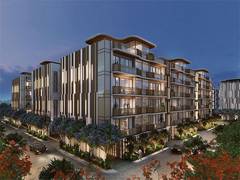
In response to these challenges, Gurugram is witnessing a shift in its development patterns. Historically concentrated in areas like Golf Course Road and Cyber City, new growth is now emerging along corridors such as Dwarka Expressway and Southern Peripheral Road. This strategic expansion aims to alleviate pressure from already congested zones and create new urban clusters that offer improved connectivity and livability. Developments like MRG Crown in Sector 106 exemplify this trend, focusing on integrated living environments that prioritize accessibility while catering to the needs of a growing population. As Gurugram navigates its evolving landscape, the balance between continued growth and sustainable urban development will be essential in shaping its future as a leading real estate market in India.