
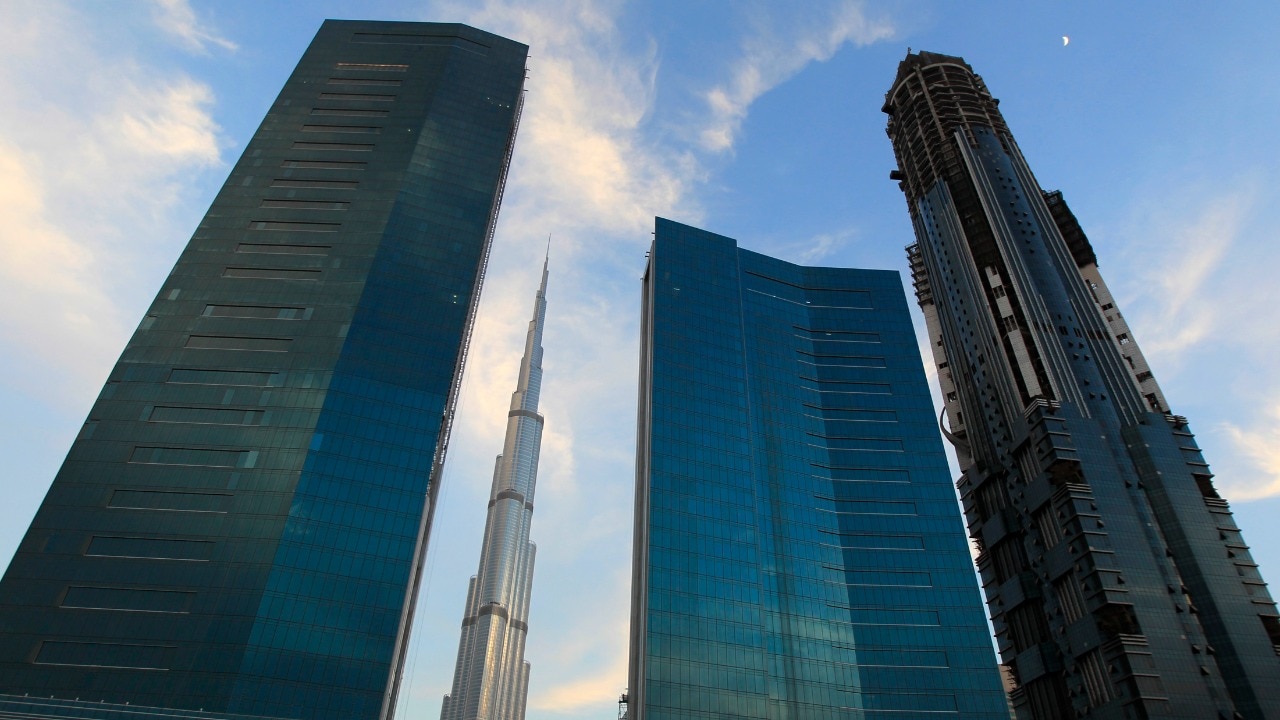
Dubai has long established itself as a secure haven for global wealth, attracting billionaires, investors, and expatriates keen to invest in luxury properties insulated from geopolitical disturbances. However, recent tensions involving Iran and other Gulf regions are testing this perception, as reports of attacks have emerged in the UAE, raising concerns about the potential impact on one of the world's most vibrant real estate markets. The question now is whether these geopolitical uncertainties could destabilize Dubai's booming property sector.
Despite these challenges, analysts emphasize that Dubai's real estate market has historically demonstrated resilience in the face of geopolitical risks. Dr. Prashant Thakur, Executive Director and Head of Research and Advisory at ANAROCK Group, pointed out that while investor sentiment may be affected in the short term, the underlying fundamentals of the market remain strong. "The escalation of tensions has once again brought Dubai's real estate market into focus," he noted. "However, historical trends suggest that the impact of these tensions may not be long-lasting."
In fact, Dubai entered this phase of geopolitical uncertainty from a position of strength. According to ANAROCK's analysis, the emirate recorded nearly AED 917 billion in real estate transactions in 2025, equivalent to about $250 billion, marking the highest value of property deals in the city's history. The volume of transactions exceeded 270,000, indicating robust investor engagement and high liquidity within the market. Residential properties were significant contributors to this growth, with around 200,000 residential transactions valued at approximately AED 538 billion. Furthermore, residential prices in Dubai have surged by 60% to 75% since 2021, highlighting the city's position as one of the strongest housing markets globally in the post-pandemic era.
Analysts suggest that markets experiencing strong growth tend to respond to geopolitical shocks differently. Instead of an immediate decline in property prices, the initial effect is typically observed in transaction activity as investors adopt a more cautious approach. Dr. Thakur pointed out that the current situation introduces a new challenge for Dubai, as recent conflicts have brought the Emirate itself under threat. While physical damage has been limited, the psychological impact on global investors is significant. The perception of Dubai as a safe economic hub is being tested, and while the market has the capacity to absorb shocks, maintaining investor confidence will be crucial for the continued growth of Dubai's real estate sector. The coming months will be critical in determining how these geopolitical tensions shape the future of this dynamic market.