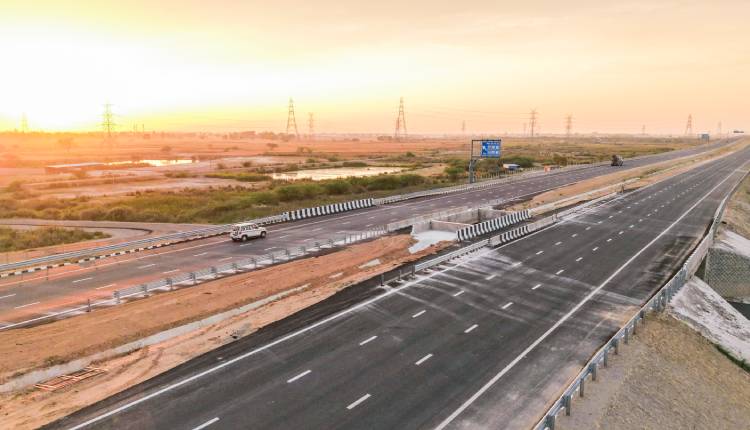
The recently inaugurated Ganga Expressway in Uttar Pradesh, stretching nearly 600 kilometers and constructed at an estimated cost of Rs 36,000 crore, promises to unlock substantial economic growth across the region. Prime Minister Narendra Modi inaugurated the expressway, which connects Meerut and Prayagraj and is anticipated to enhance logistics, industrial activity, and real estate development throughout twelve districts. According to a report by Knight Frank India, this infrastructure project is set to significantly improve travel times and connectivity with the Delhi-NCR region, thereby fostering regional integration and facilitating economic opportunities.
The Ganga Expressway is projected to create value at eighteen interchange nodes distributed along the corridor, with development anticipated to occur in three distinct phases. In the initial three years of operation, the first phase will likely see the emergence of Grade A warehousing and logistics facilities within a five-kilometer radius of these nodes, driven by enhanced connectivity and rapid price discovery. Following this, the second phase, expected to unfold over the next two to five years, will likely witness increased industrial activities, heightened residential demand in district towns, and the expansion of essential infrastructure such as retail, healthcare, and education within a five to twenty-kilometer belt from the expressway.
In the long term, spanning five to ten years, the corridor is expected to facilitate land aggregation and large-scale residential and industrial development, particularly in areas traditionally dominated by agriculture. This shift in land use signifies a potential transformation of Uttar Pradesh's growth model from a city-centric approach to a more corridor-based framework, emphasizing logistics and industrial expansion. Knight Frank's Executive Director of Government and Infrastructure Advisory, Rajeev Vijay, emphasized that the Ganga Expressway will create a high-speed economic geography, effectively linking the manufacturing belt of western Uttar Pradesh with the agricultural heartland of central UP and the educational and pilgrimage economy of eastern UP.
The report identifies Meerut and Prayagraj as high-readiness hubs poised to gain early benefits from the expressway, while districts such as Hardoi, Unnao, and Hapur are emerging as key growth centers with significant potential for industrial and warehousing development. Knight Frank India's District Readiness Index underscores the preparedness of these districts to capitalize on the enhanced connectivity. Meanwhile, Pratapgarh, Badaun, and Sambhal are classified as lower readiness areas, indicating a need for further investment and development to fully leverage the opportunities presented by the Ganga Expressway. Overall, the expressway is envisioned not only as a catalyst for local economic activity but also as a facilitator of broader growth across northern India, paving the way for a more integrated and prosperous future for Uttar Pradesh.