
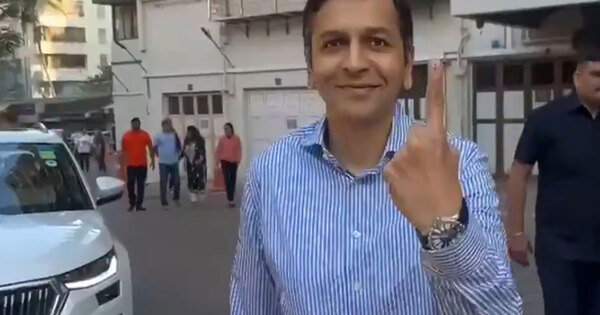
Mumbai, a bustling metropolis and the financial capital of India, is witnessing a pivotal moment as polling begins across 29 municipal corporations in Maharashtra. Abhishek Lodha, a prominent figure in the real estate sector and son of Maharashtra Minister Mangal Prabhat Lodha, took to the polls today, emphasizing the importance of civic engagement. He stated, "Voting is very important for everyone. The BMC elections have a significant impact on our daily lives." His appeal for active participation resonates deeply, as these elections shape the infrastructure and quality of life in the city.
As the polling commenced at 7:30 AM and extends until 5:30 PM, the initial voter turnout was recorded at a mere 7.12 percent by 9:30 AM. This slow start highlights a critical opportunity for citizens to reassess their civic duty. Abhishek Lodha's call to action urges all citizens to "come out in large numbers and cast their votes". The elections not only determine local governance but also influence essential services like waste management, public transport, and urban planning, which are vital for the city's functionality.
The current electoral landscape reveals a stark gender disparity in voter participation, with nearly twice as many male voters as female voters casting their ballots early in the day. Ward number 18 in Mumbai recorded the highest turnout at 11.57 percent, showcasing that some areas are more engaged than others. In contrast, ward number 162 struggled with a low turnout of 1.68 percent, indicating varying levels of civic enthusiasm across the city. This discrepancy underscores the need for targeted awareness campaigns to encourage all demographics to participate.
Political alliances play a significant role in this election, with the Bharatiya Janata Party (BJP) and Shiv Sena contesting as allies under the Mahayuti banner, while the Nationalist Congress Party (NCP) has opted for an independent approach in most corporations. This dynamic creates an intriguing battleground, particularly in Mumbai and Pune, where the competition is fierce. As Abhishek Lodha notes, the outcomes of these elections will have lasting consequences on the governance and development of the city, making every vote count.
In conclusion, Abhishek Lodha's fervent encouragement for citizens to vote serves as a reminder of the power each individual possesses in shaping their community. As the elections unfold, it is imperative for all eligible voters to recognize that their participation is not just a right, but a responsibility that directly influences their daily lives and the future of Mumbai. Let us heed this call for action and strive for a robust voter turnout that reflects the true spirit of democracy.