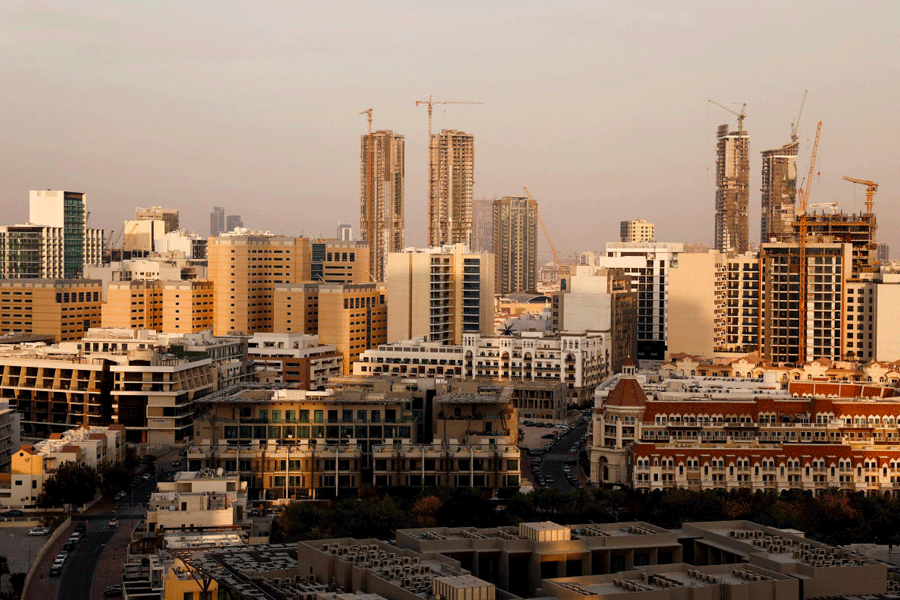
The Dubai property market is currently navigating a challenging landscape, with indications of early weakness following the recent escalation of the U.S.-Israeli conflict involving Iran. Analysts have noted a significant decline in real estate transaction volumes, which dropped 37% year-on-year and 49% month-on-month in early March, according to estimates from Goldman Sachs. This downturn raises concerns about the sustainability of Dubai's status as a premier destination for affluent investors, as the conflict has cast doubt on the city's reputation as a safe haven amidst geopolitical tensions.
Reports from real estate agents suggest that some property listings are experiencing notable price reductions, with discounts ranging from 12% to 15% for various properties. For example, a seller near the iconic Burj Khalifa is seeking a quick sale at $650,000, lowered from $735,000 due to the ongoing situation. Additionally, an off-plan apartment on Palm Jumeirah is being marketed for approximately $2 million, reflecting a 15% decrease from its original price. These price adjustments may signal shifting market dynamics, as sellers react to evolving demand influenced by external factors.
The current environment marks a pivotal moment for a market that has seen considerable growth over the past five years, driven largely by an influx of wealthy migrants attracted to the UAE’s favorable tax policies. However, the ongoing conflict poses unprecedented challenges, with property developer stocks, such as Emaar Properties, down over 26% since the hostilities began. Furthermore, Goldman Sachs reported that the total value of completed transactions for March is approximately half of what was recorded in February, a decline more severe than previous downturns during adverse events.
Despite the prevailing uncertainties, industry executives remain cautiously optimistic, noting that market activity has not entirely ceased. Imran Sheikh, chairman of BlackOak, remarked that while risk perceptions vary among investors, transaction data indicates that the market is still functioning. Analysts from Citi have projected a potential slowdown in population growth and property prices, anticipating a 1% increase in Dubai’s population this year and an annual decrease in property prices of 7% through 2028 under bearish conditions. As the situation continues to unfold, stakeholders in Dubai's real estate sector will be closely monitoring market trends to gauge the long-term implications of the ongoing conflict.