
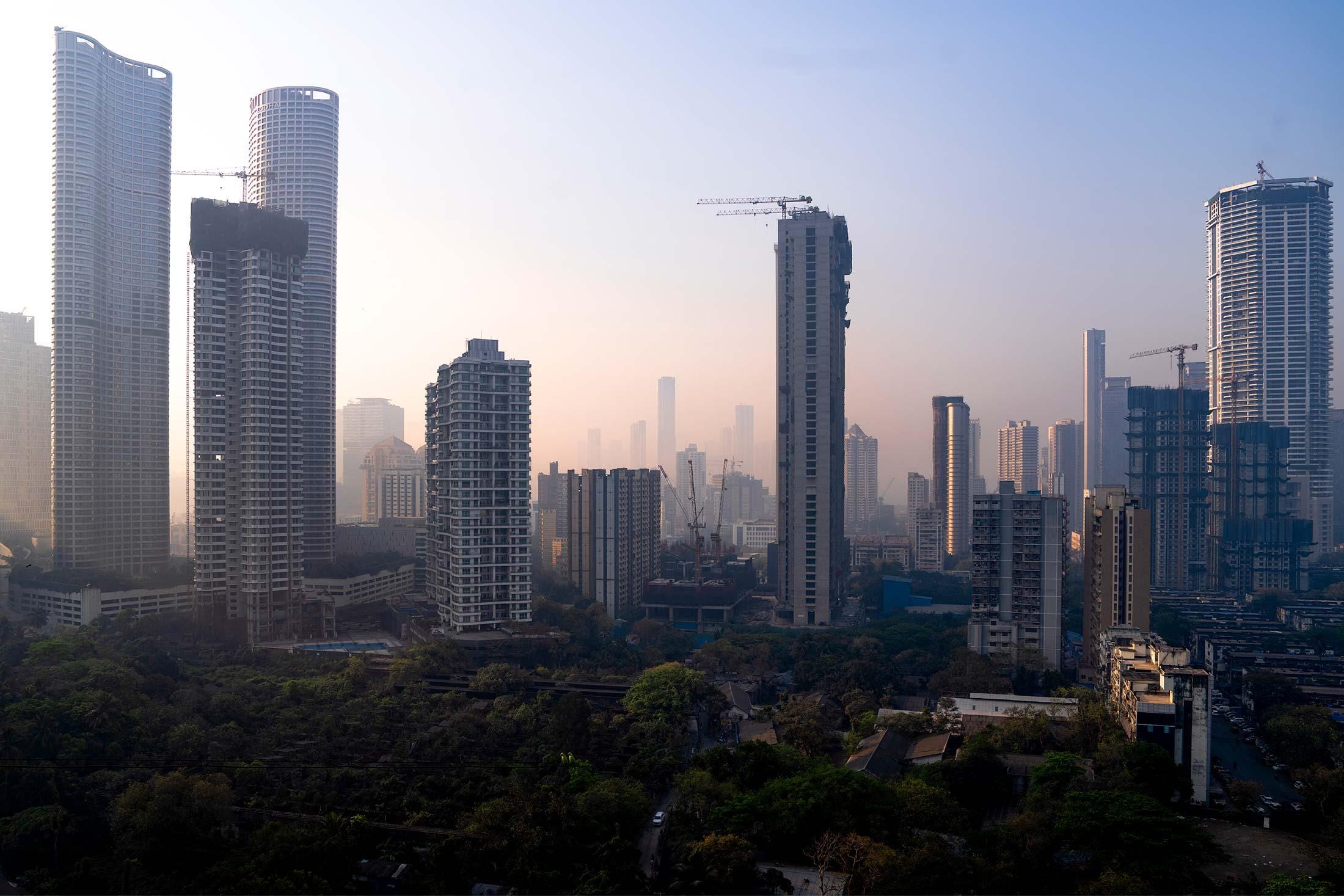
In recent years, India's luxury real estate market has witnessed a dramatic surge in prices, with $1 million now buying significantly less prime residential space compared to previous years. According to the Knight Frank Wealth Report 2026, the purchasing power of $1 million in Indian cities has diminished, allowing buyers to acquire only 96 square meters in Mumbai, 205 square meters in Delhi, and 357 square meters in Bengaluru. This trend highlights a growing demand for luxury properties among high-net-worth individuals, resulting in increased competition and escalating prices in key urban centers across the country.
Despite the rising costs, Indian cities still offer relative affordability when compared to the world's most expensive real estate markets. For instance, in Monaco, $1 million secures merely 16 square meters, while Hong Kong offers 23 square meters and Geneva provides 28 square meters for the same investment. This juxtaposition illustrates that while Indian luxury markets are gaining ground, they remain more accessible than many global counterparts. However, the gap appears to be narrowing as the rate of price appreciation outpaces currency fluctuations, making it increasingly challenging for international buyers to capitalize on perceived value in Indian real estate.
The depreciation of the Indian rupee by approximately 5.4% against the dollar has not translated into cheaper property for foreign buyers; instead, residential prices in Mumbai, Delhi, and Bengaluru have surged significantly. Mumbai saw an 8.7% year-on-year increase, while Delhi and Bengaluru recorded increases of 6.9% and 9.4%, respectively. This scenario culminates in a paradox where buyers receive less space for the same investment, as the appreciation of luxury property prices exceeds the depreciation of the currency.
The escalating demand for luxury housing is primarily fueled by a burgeoning wealth base in India, particularly in metropolitan regions. Mumbai continues to lead with record sales of homes priced above $2 million, while Bengaluru has emerged as a vibrant market, bolstered by tech wealth and a growing number of high-income professionals. The Knight Frank Prime International Residential Index (PIRI 100) reflects this trend, showcasing Bengaluru's impressive rise to eighth place globally, with Mumbai and Delhi also climbing the ranks due to their notable price growth. As a result, Indian cities are increasingly recognized as significant players in the global luxury property market, marking a notable shift in the dynamics of real estate investment in the region.