
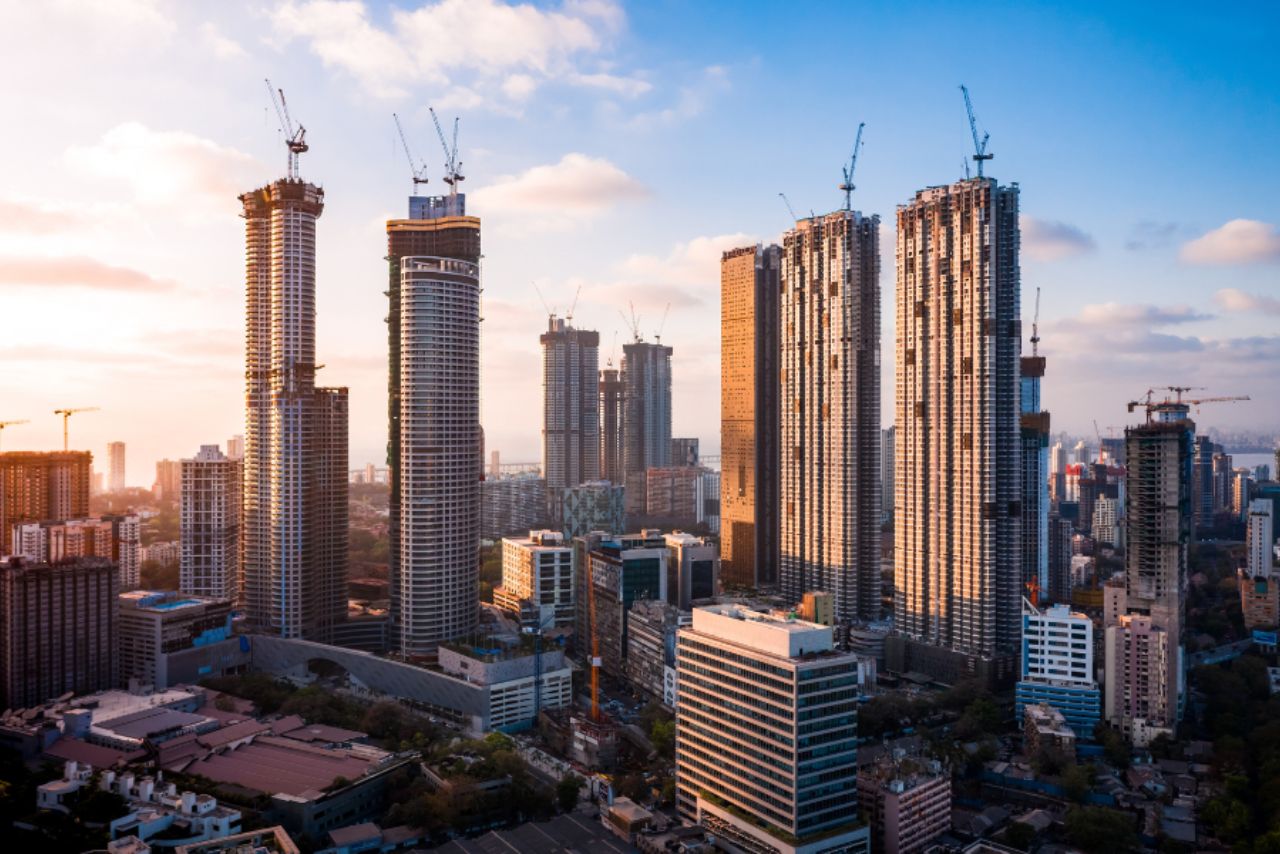
The commercial real estate sector has garnered renewed attention as recent developments suggest a potential resurgence. Despite a period of underperformance in real estate stocks and concerns regarding a slowdown in housing demand, indicators from the hospitality sector, office assets, and institutional capital flows hint at a revitalization in the market. This evolving landscape is crucial not only for investors but also for the broader economic connections that real estate maintains with various industries such as banking, construction, and employment generation.
The hospitality segment has emerged as a significant early indicator of improving market sentiment. Notably, brokerage firm JM Financial has expressed a favorable outlook on hotel stocks, highlighting companies like Indian Hotels Company Limited and Lemon Tree Hotels. These firms report robust travel demand, increasing occupancy rates, and a rise in room prices, all of which are essential factors for the health of commercial real estate. The performance of hotel companies often reflects the strength of urban real estate markets, as hotels are intricately linked to premium land parcels and business districts. For instance, Lemon Tree Hotels, which operates 259 hotels across 150 locations, saw a 14% year-on-year revenue increase to ₹406 crore in Q3 FY25. Similarly, Indian Hotels Company Limited reported a 12% revenue growth year-on-year in the same quarter, showcasing the sector's resilience.
In addition to hospitality, the commercial office market in India appears to be thriving, bolstered by demand from Global Capability Centres (GCCs), IT firms, consulting agencies, and multinational corporations. Cities such as Bengaluru, Hyderabad, Pune, Chennai, and Gurugram are pivotal in this growth, serving as key hubs for Grade-A office spaces. The growth trend is further accentuated by flexible workspace providers like WeWork India, which have reported consistent demand for managed office solutions. This reflects a shift in corporate preferences towards scalable and premium workspaces, indicating a broader acceptance of innovative work environments.
Moreover, institutional investment is playing a critical role in supporting the commercial real estate landscape. Brookfield India REIT, a prominent player in the sector, has recently undertaken a ₹2,600 crore Qualified Institutional Placement (QIP) to boost its capital. Its portfolio, which encompasses campus-format office parks in cities like Mumbai and Noida, reported a 14% increase in revenue year-on-year, reaching ₹690 crores in Q3 FY25. Such developments underscore the growing investor confidence in the commercial real estate market, suggesting that it may be entering a new growth phase. As global companies increasingly look to expand their operations in India, the demand for quality commercial spaces is likely to continue on an upward trajectory, marking a significant turning point for the sector.